Data highlighted in RED updated this week.
Note: The Bank Credit data is continually revised, so we are only
publishing the change YTD from now on.
Links:
JOBS JOBS JOBS JOBS.....!!
U6 Ticks up to 16.9%

 Click on graph for larger image.
This graph shows the job losses from the start of the employment recession, in percentage terms - but this time aligned at the bottom of the recession. This assumes that the 2007 recession has reached bottom.
The current recession has been bouncing along the bottom for a few months - so the choice of bottom is a little arbitrary (plus or minus a month or two).
The current recession has been bouncing along the bottom for a few months - so the choice of bottom is a little arbitrary (plus or minus a month or two).

This graph shows the employment-population ratio; this is the ratio of employed Americans to the adult population.
The Employment-Population ratio ticked up slightly to 58.6% in March, after plunging since the start of the recession. This is about the same level as in 1983.
 Click on graph for larger image . Separations declining, but hiring not picking up, yet....Seekers per opening ticks up to 5.5 in Feb.
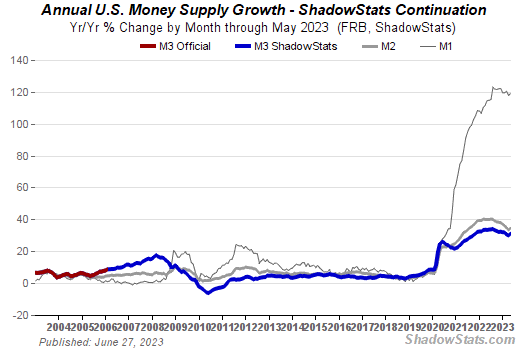
M3 Dropping at a rate of 4%, vs. 3.5% last reading...
National ISM Mfg. at 59.6 vs. 56.3 expected
Domestic Motor Vehicle Sales at 8.8mm rate vs. Feb's 7.7mm rate
Reis estimates CRE vacancies peaking:
 Click on graph for larger image in new window.
This graph shows the office vacancy rate starting 1991.
Reis is reporting the vacancy rate rose to 17.2% in Q1 2010, up from 17.0% in Q4, and up from 15.2% in Q1 2009. The peak following the previous recession was 16.9%.
Debt Productivity Plunges
.jpg)
Bank Credit: $8,853 bn.Bank credit has contracted $145 bn since Dec. 2009, vs. a contraction of $280 bn for all of 2009.
U6: 16.8% Upticks from 16.5%
Dollar Index: 98.42, down vs. 99.5 on gains in oil and gold last week...Index rebased to 100 on 1.1.10.
Weightings: US Broad Dollar Index: 60%/Gold 20%/Oil 20%
DXY index: 103.67 vs. last week's 104.78. (for reference) rebased to 100 on 1.1.10.
BIC est. 2010 gdp growth: 8.9%, raised from 8.75% due to China forecast
raised by 0.5% by the World Bank.
Weightings: China 60%/India 20%/Brazil 20%.
China Rates: Tightening bias through loan restrictions: (=/-)
Tipping Points:
| STATISTICS FROM THE US GOVT. |
| (Billions) |
| US GDP 2010: $14,620 |
| US Gross Debt: $12,464 |
| US Official (net) Debt 2010 $9,300, as % of GDP: 64% |
| Gross Federal Debt: $12,450: as a % of GDP: 85% |
| State &Local debt: $2,200, (approx) |
| US Deficit 2010: $1,556, as % of spending: 42% |
| US interest expense: $310, as a % of Federal Revenues: 17% US interest expense including FUNDED Social Security and Medicare is $310, or 17% of Federal Revenues. We should use this figure, because this is money that is has been spent already, but is still owed for entitlements. |
- Federal Interest Costs/Federal Revenues: 17% .The Tipping Point is 30%.
- USA Gov deficit as % of expenditures: 42%. The Bernholz definition of the tipping point is 40%.
- USA Gov Debt (net)/GDP: 64% (Gross debt is 85% which includes SS & M-care non funded obligations). Tipping Point is 90-100% as defined by Rogoff & Reinhart. There is an additional $440bn of GSE debt in default that could also be added. The current gross debt ceiling, which will be breached in 12 months, is $14.3Tn.
- Protectionism Meter: 5.5 on a scale of 10. Rising trend. Premier Wen's speech.
- Federal Reserve QE post March 2010 status: TBD
Official Debt is borrowings held by the public.
Gross d

No comments:
Post a Comment