Tuesday, April 13, 2010

SMORGASBORD

NFIB INDEX WEAK:

The NFIB Small Business Optimism index came in at 86.8, a decline from the March's read. As the NFIB itself confirms: "The persistence of index readings below 90 is unprecedented in survey history. “The March reading is very low and headed in the wrong direction,” said Bill Dunkelberg, NFIB chief economist. “Something isn’t sitting well with small business owners. Poor sales and uncertainty continue to overwhelm any other good news about the economy.”

Is a second wave of defaults on the way?

Bad Bank Loans Soar


Trade deficit a touch higher vs. estimates.
U.S. Trade Deficit

Monday, April 12, 2010

No Wonder Things Feel Lousy


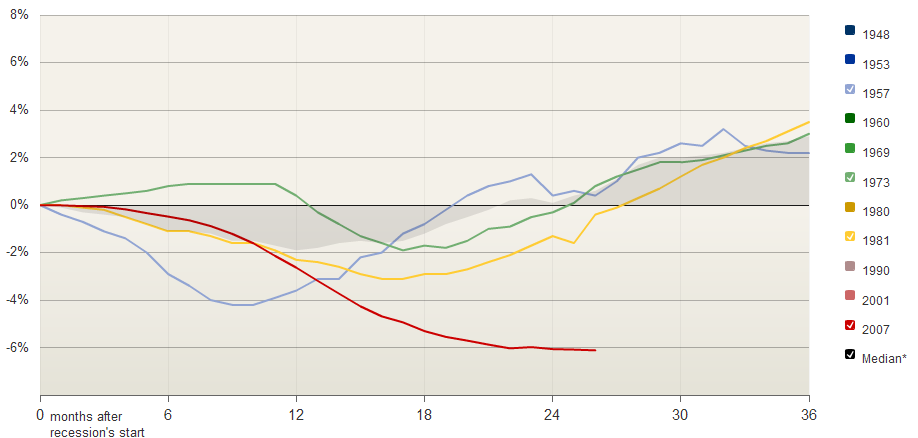
Recession Measure IncomeReal incomes less transfer payments as a percent of the previous peak...we have a long way to go...

Sunday, April 11, 2010

Is this the biggest story of the year???

Link: Whistleblower tells all regarding JPMorgan Gold Price Manipulation
Excerpt:
There is no silver lining to the activities of JPMorgan Chase and HSBC in the precious-metals market here and in London, says a 40-year veteran of the metal pits.

The banks, which do the Federal Reserve's bidding in the metals markets, have long been the government's lead actors in keeping down the prices of gold and silver, according to a former Goldman Sachs trader working at the London Bullion Market Association.

Maguire was scheduled to testify last week before the Commodities Futures Trade Commission, which is looking into the activities of large banks in the metals market, but was knocked off the list at the last moment. So, he went public.

Maguire -- in an exclusive interview with The Post -- explained JPMorgan's role in the metals pits in both London and here, and how they can generate a profit either way the market moves.

Saturday, April 10, 2010

Making Sure We Don't Lose Sight of the Big Picture!

Doug Noland, Federated Funds:

Despite alarming financial vulnerability, state and local governments continue to pile on debt at incredibly attractive terms. In spite of underlying financial and economic fragility, junk debt issuance is running at record pace. Inflows continue to inundate bond funds - at home and abroad. Estimates now put hedge fund asset as high as $2 Trillion by the end of the year. Retail stocks are not far away from record highs. Risk premiums are narrow throughout.

The massive issuance of government “money” has always been inflationism’s trump card. It’s now in play, and this latest round of inflationism is again profoundly distorting market perceptions. “Too big to fail” has broadened from large financial institutions to encompass the entire system. Today, GSE obligations and municipal debt enjoy “moneyness” only because of the markets’ belief that Washington will not tolerate disruptions in these key markets. Risk premiums throughout the corporate debt market have collapsed on the back of the view that massive stimulus ensures economic growth and strong company balance sheets. Throughout the risk markets, prices are bouyed by confidence that the Fed will restart monetization operations in the event of any market liquidity disruption. Hedge funds and other speculators are thriving once again as they successfully exploite Washington’s inflationary policymaking. Washington is there with ongoing massive fiscal stimulus, ultra-low interest rates, and a liquidity backstop.

I noted above that “‘Money’ is inherently dangerous because virtually insatiable demand creates a propensity for over-issuance.” There is a second fundamental danger inherent in “money:” A loss of confidence immediately incites a very disruptive systemic dislocation. If you can’t trust money, what can you trust? No trust – no functioning Credit system or stable economy. Indeed, you really don’t want to mess with “money.”

Importantly, you don’t want to allow distortions in money perceptions to establish a foothold. Such distortions are always and everywhere the lifeblood of Bubbles. Above all, you certainly don’t want to finance a massive inflation of non-productive debt with “money.” This only ensures a problematic widening gulf between perceptions of safety and liquidity and the actual deteriorating underlying soundness of these financial claims. And when the inflation of this money is also distorting market perceptions for Credit and asset prices throughout the entire system, inflationism is really playing with fire. Money Not Good.


Friday, April 9, 2010

From Bank of Intl Settlements:

Distressed sales as a % of home sales rising...
Distressed Sales

Thursday, April 8, 2010

Perspectives on the Recession


Change in Nonfarm Payroll


>

Change in GDP

Change in Industrial Output


>